
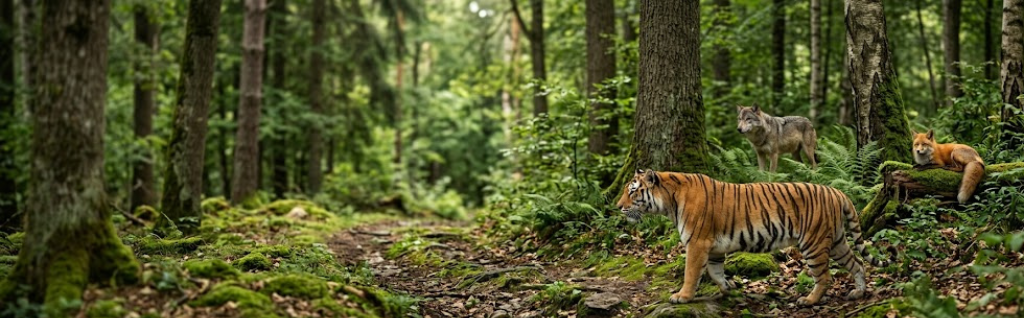
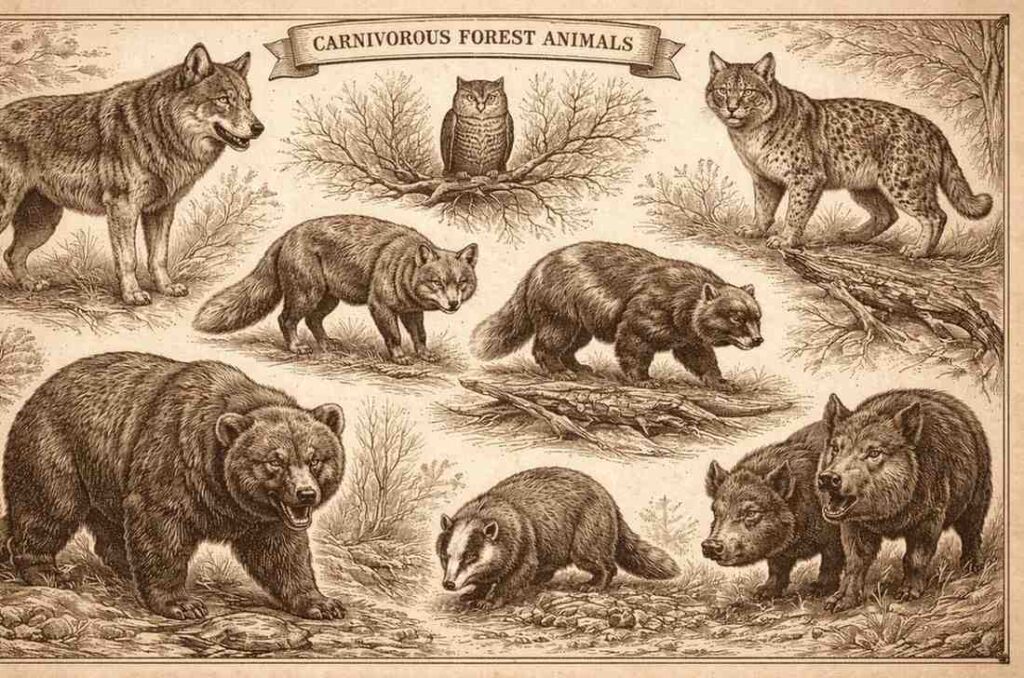
Carnivorous Forest Animals are species that primarily rely on meat as their main source of nutrition while living in forest ecosystems. These animals have evolved sharp hunting instincts, powerful physical traits, and specialized diets that allow them to thrive in dense, competitive environments. From stealthy predators like big cats to smaller yet equally efficient hunters, these creatures play a vital role in maintaining the balance of forest life.
The importance of Carnivorous Forest Animals in ecosystems cannot be overstated. They help regulate prey populations, prevent overgrazing, and ensure that weaker or diseased animals are naturally removed from the environment. This natural control supports biodiversity and keeps forest habitats healthy and sustainable. Without these predators, ecosystems could quickly become imbalanced, leading to long-term environmental consequences.
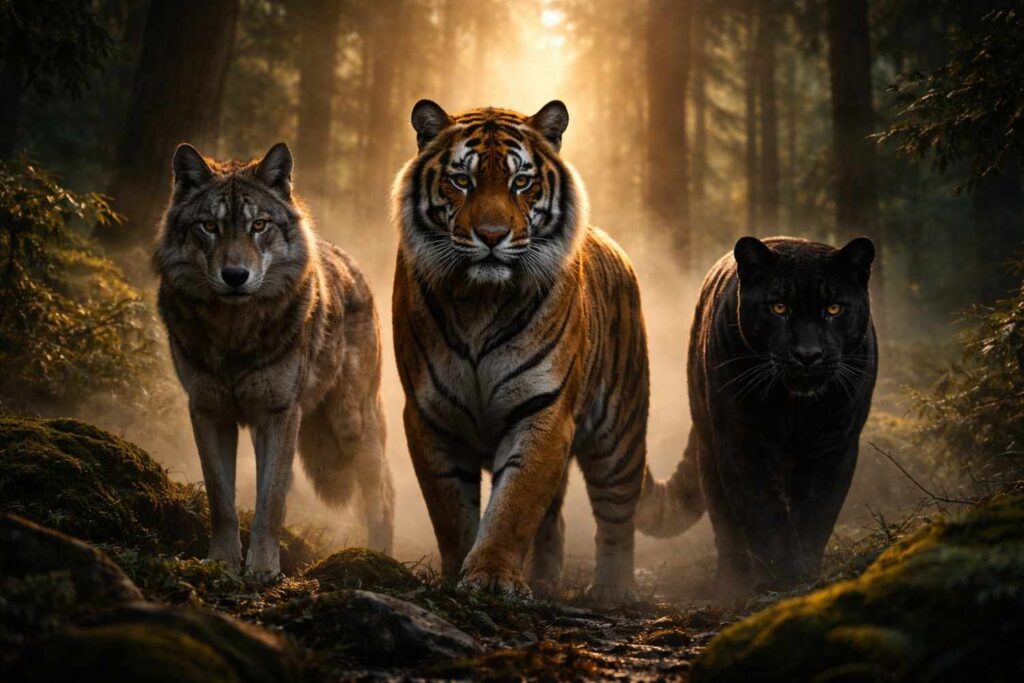
In this comprehensive guide, we will explore the fascinating world of Carnivorous Forest Animals, including their characteristics, hunting strategies, habitats, and ecological roles. You’ll also discover how these animals adapt to their surroundings and why they are essential for the survival of forest ecosystems across the globe.
What Are Carnivorous Forest Animals?
Carnivorous Forest Animals are species that depend primarily on other animals for their food and survival within forest ecosystems. These animals are natural hunters or scavengers, feeding on flesh to obtain essential nutrients like protein and fat. Living in dense forests, they have developed specialized adaptations such as sharp claws, keen eyesight, and strong jaws that help them capture and consume prey efficiently. From large predators like tigers and leopards to smaller hunters such as foxes and wildcats, Carnivorous Forest Animals exist at different levels of the forest ecosystem.
To better understand Carnivorous Forest Animals, it is important to distinguish them from omnivores. Carnivores rely almost entirely on meat, while omnivores consume both plant and animal matter. For example, a wolf is a carnivore because it hunts and eats other animals, whereas a bear is considered an omnivore because it eats fruits, plants, and meat. This dietary difference affects their physical traits as well—carnivores typically have sharper teeth and stronger hunting instincts compared to omnivores, which have more versatile feeding habits.
In the forest food chain, Carnivorous Forest Animals play a critical role as predators. They are usually positioned at higher trophic levels, meaning they feed on herbivores or smaller carnivores. This helps control animal populations and prevents ecosystems from becoming overcrowded or unbalanced. For instance, if herbivore populations grow unchecked, they can overconsume vegetation, leading to habitat degradation. Carnivores help maintain this balance by naturally regulating prey numbers.
Here is a simple comparison to highlight the differences between major dietary groups:
| Feature | Carnivores | Herbivores |
|---|---|---|
| Diet | Meat | Plants |
| Teeth | Sharp and pointed | Flat and broad |
| Digestive System | Shorter, designed for meat | Longer, designed for plants |
Key Characteristics of Carnivorous Forest Animals
Carnivorous Forest Animals possess a unique set of physical and behavioral traits that enable them to survive and dominate within forest ecosystems. These characteristics are the result of millions of years of evolution, allowing them to hunt efficiently, adapt to changing environments, and compete with other predators. Understanding these features provides insight into how Carnivorous Forest Animals maintain their position in the wild.
Physical Traits of Carnivorous Forest Animals
The physical structure of Carnivorous Forest Animals is specifically designed for hunting and consuming prey. Their bodies are built for strength, speed, and precision, which are essential for survival in dense forests.
- Sharp claws for gripping and tearing prey
- Strong jaws capable of crushing bones and flesh
- Night vision that allows them to hunt in low-light conditions
- Muscular bodies for agility and quick movement
- Forward-facing eyes for better depth perception
These physical adaptations give Carnivorous Forest Animals a significant advantage when tracking and capturing prey, especially in environments where visibility and space can be limited.
Behavioral Traits of Carnivorous Forest Animals
In addition to their physical abilities, Carnivorous Forest Animals exhibit complex behavioral patterns that enhance their survival. These behaviors often vary depending on the species, habitat, and availability of food.
Many Carnivorous Forest Animals are territorial, marking and defending their hunting grounds to ensure a consistent food supply. Some species, like wolves, hunt in packs, using teamwork and coordination to take down larger prey. Others, such as leopards, prefer solitary hunting, relying on stealth and patience to ambush their targets.
They also display high levels of intelligence and adaptability. For example, some predators adjust their hunting times based on prey activity, while others change their diet when food becomes scarce. This flexibility allows Carnivorous Forest Animals to survive even in challenging conditions.
Hunting Instincts and Strategies
Hunting is a defining trait of Carnivorous Forest Animals, and their instincts are finely tuned for efficiency and success. These animals rely on a combination of stealth, speed, and timing to capture their prey.
- Ambush hunting, where predators remain hidden and strike suddenly
- Chase hunting, involving speed and endurance to catch prey
- Scavenging behavior, feeding on already dead animals when necessary
- Use of camouflage to blend into the forest environment
- Silent movement to avoid alerting prey

These strategies highlight the remarkable survival skills of Carnivorous Forest Animals, allowing them to thrive in diverse forest habitats. Their ability to combine physical strength with intelligent hunting techniques makes them some of the most effective predators in the natural world.
Types of Carnivorous Forest Animals
Carnivorous Forest Animals are incredibly diverse, ranging from powerful apex predators to small, agile hunters. Each type plays a specific role in maintaining the ecological balance of forest habitats. These animals differ in size, hunting techniques, and habitat preferences, yet they all share one common trait—their reliance on meat for survival. Understanding the different types of Carnivorous Forest Animals helps highlight the complexity and richness of forest ecosystems.
Big Cats
Big cats are among the most iconic Carnivorous Forest Animals, known for their strength, stealth, and dominance. Species such as tigers, leopards, and jaguars are commonly found in dense forests across Asia, Africa, and the Americas.
These predators typically inhabit thick forests, where they can use vegetation as cover for ambush hunting. Their hunting style relies heavily on stealth, patience, and explosive power. They stalk their prey silently and strike with precision, often targeting deer, wild boar, and other medium to large animals.
- Examples: Tiger, Leopard, Jaguar
- Habitat: Tropical rainforests, dense woodlands
- Hunting Style: Ambush and stealth attacks
- Key Traits: Strong limbs, sharp claws, excellent night vision
Big cats are apex Carnivorous Forest Animals, meaning they sit at the top of the food chain and have very few natural predators.
Canines
Canines, including wolves, foxes, and wild dogs, are highly adaptable Carnivorous Forest Animals known for their intelligence and social behavior. These animals are commonly found in forested regions across North America, Europe, and parts of Asia.
Unlike solitary hunters, many canines rely on teamwork. Wolves, for example, hunt in packs, coordinating their movements to surround and exhaust prey. Their hunting style is based on endurance and cooperation rather than stealth alone.
- Examples: Wolves, Foxes, Wild Dogs
- Habitat: Temperate forests, boreal forests
- Hunting Style: Pack hunting and chasing
- Key Traits: Strong sense of smell, teamwork, endurance
Canines are versatile Carnivorous Forest Animals that can adjust their hunting strategies depending on the availability of prey.
Bears
Bears are unique among Carnivorous Forest Animals because many species are technically omnivores, yet they still rely heavily on meat in forest environments. Species like brown bears and black bears are commonly found in forested areas where food sources vary by season.
Bears are opportunistic feeders. While they may hunt animals such as fish, deer, or small mammals, they also scavenge and consume plant matter when necessary. Their strength allows them to overpower prey, but they often prefer energy-efficient feeding strategies.
- Examples: Brown Bear, Black Bear
- Habitat: Dense forests, mountainous woodlands
- Hunting Style: Opportunistic hunting and scavenging
- Key Traits: Powerful build, strong claws, high adaptability
These Carnivorous Forest Animals are known for their intelligence and ability to survive in diverse environmental conditions.
Small Carnivores
Small carnivores may not be as intimidating as larger predators, but they are equally important Carnivorous Forest Animals within the ecosystem. This group includes animals like wildcats, martens, weasels, and civets.
These animals typically inhabit dense undergrowth, where they hunt smaller prey such as rodents, birds, insects, and reptiles. Their hunting style focuses on speed, agility, and quick reflexes. Many of them are nocturnal, taking advantage of darkness to avoid predators and catch prey.
- Examples: Wildcats, Weasels, Martens, Civets
- Habitat: Forest floors, thick vegetation
- Hunting Style: Quick attacks and agile movement
- Key Traits: Small size, fast reflexes, sharp senses
Small Carnivorous Forest Animals play a crucial role in controlling populations of smaller species, ensuring ecological balance at lower levels of the food chain.
Forest Habitats Where Carnivores Live
Carnivorous Forest Animals are found in a wide range of forest habitats across the world, each offering unique environmental conditions that shape their behavior, diet, and survival strategies. These habitats differ in climate, vegetation, and prey availability, which directly influence how Carnivorous Forest Animals adapt and thrive. From dense tropical jungles to cold northern forests, each ecosystem supports a distinct group of predators.
Tropical Forests
Tropical forests are among the richest ecosystems on Earth, providing an ideal environment for many Carnivorous Forest Animals. These forests are characterized by high temperatures, heavy rainfall, and dense vegetation, which create excellent conditions for stealth hunting.
Predators such as tigers, jaguars, and leopards dominate these regions. The thick canopy and undergrowth allow them to remain hidden while stalking prey. Food is usually abundant, including deer, monkeys, and smaller mammals, which supports a high diversity of carnivores. Many species in tropical forests rely heavily on camouflage and silent movement to succeed in hunting.
Temperate Forests
Temperate forests experience moderate climates with distinct seasons, including warm summers and cold winters. These forests are home to a variety of Carnivorous Forest Animals that have adapted to seasonal changes in food availability.
Animals such as wolves, foxes, and black bears are commonly found here. During warmer months, prey is plentiful, allowing predators to hunt actively. In colder seasons, some animals adjust their diet or behavior, while others, like bears, may enter periods of reduced activity. The mix of open spaces and dense vegetation provides both hunting grounds and shelter.
Boreal Forests
Boreal forests, also known as taiga, are found in northern regions and are characterized by long, harsh winters and short summers. Despite the extreme conditions, several Carnivorous Forest Animals have successfully adapted to this environment.
Species such as lynxes, wolves, and wolverines are well-suited for survival in cold climates. These animals have thick fur for insulation and strong endurance to travel long distances in search of food. Prey is less abundant compared to other forests, so predators must be highly efficient hunters. Their ability to track animals over snow and endure freezing temperatures is essential for survival.
Comparison of Forest Types
Below is a simple comparison of the main forest habitats where Carnivorous Forest Animals live:
| Forest Type | Climate | Animals |
|---|---|---|
| Tropical Forests | Hot and humid, heavy rainfall | Tigers, Jaguars, Leopards |
| Temperate Forests | Moderate with seasonal changes | Wolves, Foxes, Bears |
| Boreal Forests | Cold with long winters | Lynxes, Wolves, Wolverines |
Each of these environments plays a crucial role in supporting different species of Carnivorous Forest Animals. Their ability to adapt to varying climates and ecological conditions highlights their resilience and importance in maintaining the balance of forest ecosystems worldwide.
Hunting Techniques of Carnivorous Forest Animals
Carnivorous Forest Animals rely on a wide range of hunting techniques to capture prey and survive in competitive forest ecosystems. These strategies are shaped by factors such as habitat type, prey availability, and the physical abilities of each species. Whether hunting alone or in groups, Carnivorous Forest Animals use intelligence, patience, and adaptability to ensure successful feeding. Their techniques are not only fascinating but also essential for maintaining ecological balance.
Ambush Hunting
Ambush hunting is one of the most common strategies used by Carnivorous Forest Animals, especially in dense forests where visibility is limited. This method depends on stealth, patience, and precise timing.
- Predators remain hidden in vegetation or behind natural cover
- They rely on camouflage to blend into their surroundings
- Movement is slow and silent to avoid detection
- Attack is launched suddenly with speed and force
- Common in animals like tigers, leopards, and wildcats
This technique allows Carnivorous Forest Animals to conserve energy while maximizing their chances of catching prey in a single, powerful strike.
Pack Hunting
Pack hunting is a highly coordinated strategy used by social Carnivorous Forest Animals. It involves teamwork and communication, allowing predators to take down larger or faster prey.
- Animals hunt in organized groups with defined roles
- Prey is surrounded or driven into a vulnerable position
- Communication occurs through sounds, body language, or signals
- Requires cooperation and strategic planning
- Common in wolves and wild dogs
Through pack hunting, Carnivorous Forest Animals increase their efficiency and success rate, especially when targeting animals that would be difficult to capture alone.
Scavenging
Scavenging is another important survival strategy used by Carnivorous Forest Animals, particularly when hunting is difficult or energy resources are low. Instead of killing prey, these animals feed on carcasses left by other predators or animals that have died naturally.
- Feeding on already dead animals
- Reduces energy spent on hunting
- Helps clean the ecosystem by removing remains
- Often combined with opportunistic hunting
- Seen in animals like foxes, bears, and some wild dogs
Scavenging plays a vital ecological role, as Carnivorous Forest Animals help prevent the spread of disease by consuming decaying organic matter.
Overall, the hunting techniques of Carnivorous Forest Animals demonstrate their adaptability and survival intelligence. By using a mix of ambush, cooperation, and opportunistic feeding, these predators ensure their place in the forest ecosystem while contributing to its natural balance.
Adaptations for Survival
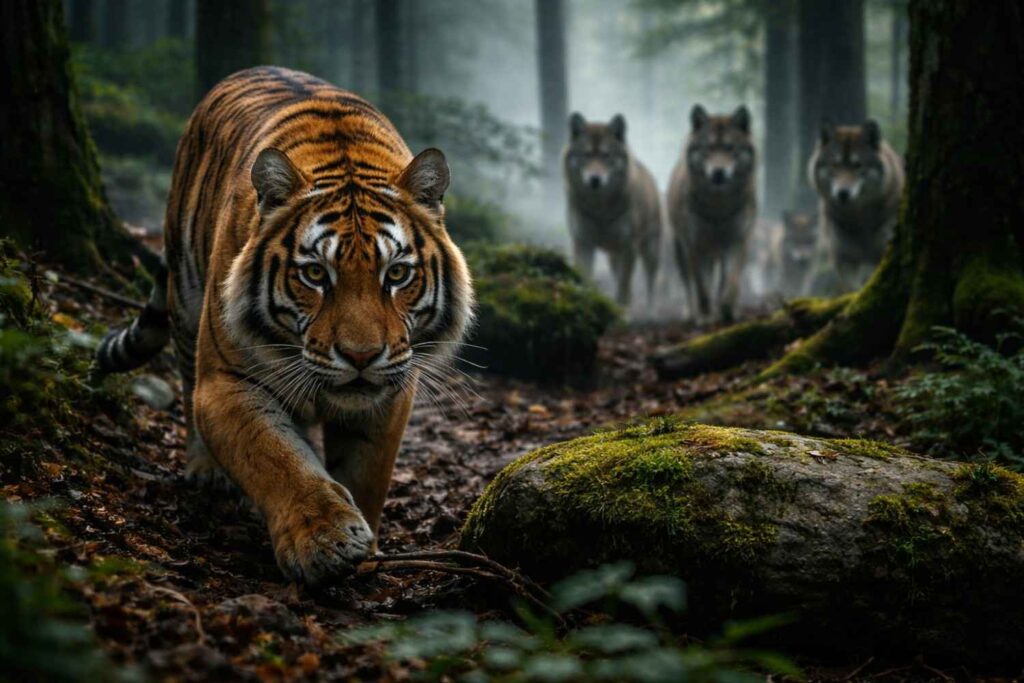
Carnivorous Forest Animals have developed a wide range of adaptations that allow them to survive and thrive in complex forest environments. These adaptations are essential for hunting, avoiding danger, and coping with changing conditions. Over time, Carnivorous Forest Animals have evolved physical, behavioral, and sensory traits that make them highly efficient predators in the wild.
Physical Adaptations
The physical features of Carnivorous Forest Animals are specifically designed to support hunting and survival. Their bodies are built for strength, speed, and precision, giving them a clear advantage over their prey.
- Sharp teeth designed for tearing flesh
- Strong jaws capable of delivering powerful bites
- Muscular limbs for speed and agility
- Retractable claws for gripping prey
- Camouflaged fur to blend into forest surroundings
These physical traits enable Carnivorous Forest Animals to move efficiently through dense forests and capture prey with minimal effort.
Behavioral Adaptations
Behavioral traits play a crucial role in how Carnivorous Forest Animals interact with their environment and secure food. These behaviors often vary depending on species, habitat, and the availability of prey.
- Nocturnal activity to hunt under the cover of darkness
- Territorial behavior to protect hunting areas
- Cooperative hunting in social species
- Seasonal migration or movement based on food availability
- Energy conservation during periods of low prey availability
Such behaviors allow Carnivorous Forest Animals to adapt to environmental changes and maintain a stable food supply throughout the year.
Sensory Adaptations
Sensory abilities are highly developed in Carnivorous Forest Animals, helping them detect prey and avoid threats even in challenging conditions. These enhanced senses are critical for survival, especially in dense forests where visibility may be limited.
- Excellent night vision for low-light hunting
- Acute sense of smell to track prey over long distances
- Sharp hearing to detect even the slightest movements
- Whiskers or tactile sensors for navigation in tight spaces
- Ability to detect vibrations in the environment
These sensory adaptations give Carnivorous Forest Animals a powerful edge, allowing them to locate prey accurately and react quickly to their surroundings. Together, these physical, behavioral, and sensory traits ensure their continued survival in the wild.
Role in the Ecosystem
Carnivorous Forest Animals play a critical role in maintaining the balance and stability of forest ecosystems. As predators, they are positioned at higher levels of the food chain, where they regulate the populations of herbivores and smaller animals. This control prevents overgrazing and ensures that vegetation can grow and regenerate naturally. Without Carnivorous Forest Animals, ecosystems could quickly become imbalanced, leading to habitat degradation and resource depletion.
One of the most important contributions of Carnivorous Forest Animals is supporting biodiversity. By keeping prey populations in check, they allow a wide variety of plant and animal species to coexist. When herbivore numbers are controlled, plant life thrives, which in turn supports insects, birds, and other wildlife. This interconnected system highlights how predators indirectly influence the health and diversity of the entire forest.
Carnivorous Forest Animals also play a key role in natural selection. By typically targeting weaker, injured, or sick animals, they help strengthen prey populations over time. This process ensures that only the fittest individuals survive and reproduce, leading to healthier species overall. It is a natural way of maintaining genetic strength within ecosystems.
Additionally, these animals contribute to ecological cleanliness by removing carcasses through hunting and scavenging. This reduces the spread of disease and keeps the environment healthier for all living organisms.
- Maintain balance in the food chain
- Support biodiversity and ecosystem health
- Promote natural selection and stronger species
- Help prevent disease by removing weak or dead animals
Overall, Carnivorous Forest Animals are essential for sustaining life in forest ecosystems, ensuring that nature remains balanced, diverse, and resilient.
Threats to Carnivorous Forest Animals
Carnivorous Forest Animals face numerous threats that are putting their survival at risk across the globe. Human activities and environmental changes have significantly impacted their natural habitats, food sources, and overall population. Understanding these threats is essential to protecting Carnivorous Forest Animals and preserving the balance of forest ecosystems.
Deforestation
Deforestation is one of the biggest threats to Carnivorous Forest Animals, as it leads to the destruction of their natural habitats. Forests are cleared for agriculture, urban development, and logging, leaving animals with limited space to live and hunt.
- Loss of habitat reduces shelter and breeding areas
- Decrease in prey availability due to ecosystem disruption
- Increased human-wildlife conflicts as animals move closer to settlements
- Fragmentation of forests isolates animal populations
As forests disappear, Carnivorous Forest Animals struggle to adapt, often leading to population decline.
Poaching
Poaching remains a serious issue affecting many Carnivorous Forest Animals, especially those valued for their fur, bones, or other body parts. Illegal hunting disrupts population stability and threatens endangered species.
- Direct reduction in population numbers
- Disruption of food chains and predator-prey relationships
- Loss of key species that maintain ecosystem balance
- Increased risk of extinction for rare animals
Poaching not only harms individual species but also weakens the overall structure of forest ecosystems where Carnivorous Forest Animals play a vital role.
Climate Change
Climate change is another growing threat to Carnivorous Forest Animals, altering the environments they depend on for survival. Changes in temperature and weather patterns affect both predators and their prey.
- Shifts in habitat conditions make survival more difficult
- Changes in prey distribution and availability
- Increased frequency of extreme weather events
- Disruption of breeding and migration patterns
These environmental changes force Carnivorous Forest Animals to adapt quickly, but not all species can keep up with the pace of change.
Overall, the survival of Carnivorous Forest Animals depends on addressing these major threats. Protecting forests, enforcing anti-poaching laws, and tackling climate change are essential steps toward ensuring their future and maintaining ecological balance.
Conservation Efforts
Protecting Carnivorous Forest Animals has become a global priority as their populations continue to face serious threats. Governments, non-governmental organizations (NGOs), and conservation groups are working together to preserve habitats, enforce laws, and raise awareness. These efforts are essential to ensure the long-term survival of Carnivorous Forest Animals and to maintain the balance of forest ecosystems.
- Government Actions
- Implementation of strict wildlife protection laws
- Creation of national parks and protected forest areas
- Anti-poaching patrols and legal enforcement
- Funding for conservation research and monitoring programs
- Role of NGOs
- Wildlife conservation programs focused on endangered Carnivorous Forest Animals
- Community awareness campaigns to reduce human-wildlife conflict
- Rescue and rehabilitation of injured or displaced animals
- Collaboration with governments for policy improvement
- Wildlife Reserves and Protected Areas
- Establishment of safe habitats where Carnivorous Forest Animals can live and breed
- Controlled environments that limit human interference
- Conservation of prey species to maintain the natural food chain
- Promotion of eco-tourism to support conservation funding
These combined efforts play a crucial role in protecting Carnivorous Forest Animals from extinction. By preserving their habitats and ensuring legal protection, conservation initiatives help maintain biodiversity and ecological balance.
Human Interaction and Conflict
The relationship between humans and Carnivorous Forest Animals is complex and often challenging. As human populations expand into forested areas, encounters between people and wildlife have become more frequent. This has led to increased human-wildlife conflict, especially in regions where forests are shrinking and natural prey is declining. Such conflicts not only threaten human safety but also endanger the survival of Carnivorous Forest Animals.

One of the primary causes of conflict is habitat loss. When forests are cleared for agriculture, infrastructure, or settlements, Carnivorous Forest Animals are forced to move closer to human communities in search of food and shelter. This often results in livestock attacks or, in rare cases, threats to human life. Additionally, a decrease in natural prey pushes these animals to hunt domesticated animals, further escalating tensions.
- Causes of Conflict
- Deforestation and habitat encroachment
- Decline in natural prey species
- Expansion of agriculture and human settlements
- Lack of awareness about wildlife behavior
- Impacts of Conflict
- Loss of livestock and economic damage to communities
- Injury or death of humans and animals
- Retaliatory killing of Carnivorous Forest Animals
- Disruption of ecological balance
To reduce these conflicts, effective solutions must be implemented that protect both humans and wildlife. Conservation strategies often focus on coexistence rather than separation.
- Solutions and Preventive Measures
- Creating buffer zones between forests and human settlements
- Using secure livestock enclosures and protective fencing
- Community education and awareness programs
- Compensation schemes for losses caused by wildlife
- Monitoring and relocation of high-risk animals when necessary
By addressing the root causes and promoting coexistence, it is possible to reduce conflict and ensure the survival of Carnivorous Forest Animals while protecting human communities.
Interesting Facts
- Carnivorous Forest Animals can be found on every continent except Antarctica, adapting to a wide range of forest environments
- Some Carnivorous Forest Animals, like tigers, are excellent swimmers and often hunt in water
- Many predators prefer hunting at night, using their strong night vision to locate prey easily
- Wolves communicate with each other using howls, body language, and scent marking
- Leopards can carry prey heavier than their own body weight and store it in trees
- Certain small carnivores, such as weasels, have incredibly fast metabolisms and need to eat frequently
- Bears, although often omnivorous, can act as powerful hunters when targeting large prey
- Camouflage plays a crucial role in helping Carnivorous Forest Animals blend into their surroundings
- Some species adjust their hunting techniques depending on the season and prey availability
- Scavenging is common among many carnivores, helping keep forest ecosystems clean and disease-free
Conclusion
Carnivorous Forest Animals are an essential part of forest ecosystems, playing a key role in maintaining balance, supporting biodiversity, and ensuring the health of natural habitats. From powerful big cats to small but agile hunters, these animals demonstrate remarkable adaptations and survival strategies that allow them to thrive in diverse forest environments. Their presence helps regulate prey populations, promotes natural selection, and keeps ecosystems functioning smoothly.
However, the survival of Carnivorous Forest Animals is increasingly threatened by human activities such as deforestation, poaching, and climate change. These challenges not only impact individual species but also disrupt the delicate balance of entire ecosystems. Without proper protection and conservation efforts, many of these animals could face significant population declines or even extinction.
Conservation is not just about protecting wildlife—it is about preserving the natural systems that support all life on Earth. By promoting sustainable practices, supporting wildlife protection laws, and raising awareness, we can help ensure a safer future for Carnivorous Forest Animals.
In the end, understanding and respecting the role of Carnivorous Forest Animals encourages a deeper connection with nature and highlights the importance of coexistence. Protecting these incredible predators means protecting the forests they call home and securing ecological balance for generations to come.